7 December 2009

A taste of things to come

My goodness we had an exciting time on Thursday.  We had been invited to the big school for a morning of music…..

IMG_3927

of patterns, of rhymes and of rhythms.  What a great introduction to our new unit it would be; a taste of things to come.

We played hand-clapping, toe-tapping…..

IMG_3942

games.  We listened to the rhythm and kept to the beat with percussion instruments…..

IMG_3936

as well as exploring the sounds that can be made using exotic plants….

IMG_3933

that had been dried and decorated; (any idea what part of a plant this might be?)

IMG_3935

We gathered round the piano and sang along to songs both old and new.

But perhaps best of all, having already enjoyed the story of ‘The Smartest Giant in Town’ by Julia Donaldson, we acted out her rhyming tale ‘Room on the Broom’ in which a witch…..

IMG_3948

finds out quite how many people her broomstick…..

IMG_3945

will take.  And the answer, as we found out for ourselves…..

IMG_3953

is a surprisingly large number!

But what about the patterns I mentioned at the beginning of this post?  Well, those amongst us who kept their eyes open during all the excitement, should recognise some – or maybe even all – of the patterns below.

boogying with francesca

With thanks to Daniel for sharing his mum with us.  And of course thanks to Mum herself!

4 December 2009

New plants from old – part two

Do you remember those trimmings from the rosemary bushes?  Well, those trimmings were snipped from the plants deliberately; we had decided to take some healthy rosemary sprigs, deliberately cut from the main plant and use them to create new plants from old.

But the other day, somebody handed me a very sad looking bit of a geranium plant that had been broken off accidentally during an over-vigorous playtime game.  And walked over by more than one pair of boot-clad feet.  Something for the compost heap?

No.  Wait.  Let’s see if we can work a bit of magic and rescue it.  Plonk the stem into some water – and wait.

And we waited.  In fact, we forgot about it.  Until the other day, an excited squeak rang out.  ‘Look!  Roots!’

Look we did.  And roots there were!

IMG_3955

But that gave us a bit of a dilemma.  You see, as well as the plant using its energy to grow roots, it also had flowers and even new buds.  All of which, we felt, would also be using up energy.

IMG_3957

So.  What to do?  Would we snip them off as we had the crispy chrysanthemum flowers in our attempt to encourage those plants to push out healthy roots?

IMG_3870

In the end we decided to pull off the bruised, boot-damaged leaves but to leave the flowers and buds intact. 

And to wait and see if we have been able to make more new plants from old.

3 December 2009

Breathing life into…..

Just look at these beautiful flowers.

IMG_3979

But don’t look too closely, because (can you keep a secret?) they aren’t real (shhh!)  Well, narcissi at this time of year?  Class funds would certainly not run to that kind of wild extravagance!  And anyway, we would be going to breathe our own life into them.

Using chalks.  Dusty, fusty brightly coloured chalks.  And careful observation. 

Look at how the leaves are attached to the stem.

IMG_3970

See how the nodding flowers (excuse a bit of poetic licence!) face in different directions.

IMG_3978

Finally, stand back and admire Leo’s finished masterpiece.

IMG_3980

Look at these dainty spring blooms.

IMG_3982

But don’t look too closely, because (can you keep a secret?) they aren’t real either! (shhh!)  Look closely at the vase they are in (that’s real all right!). 

IMG_3977

Do you see how the stems are all at different angles?

IMG_3971

Did you notice the delicate patterns around the rim?

IMG_3976

What about the pointed shapes of the pale, creamy petals?

IMG_3981

Look at these pretty pastel sweet peas. 

IMG_3985

But don’t look too closely, because (can you keep another secret?) you guessed it; they aren’t real either! (shhh!)  Inhale their (imaginary) scent.  Look at all the different shades of purples and pinks.

IMG_3975 

Finally, look at this perfect rose.

IMG_3983

And it’s OK to lean in really close…..

IMG_3973

because the rose, at least is real!

1 December 2009

Our third Unit of Inquiry – a note for parents

Our 'just-about-to start' third unit of inquiry is all about Pattern, Rhyme and Rhythm.  It lies within the Organizing Theme: 'How we express ourselves' and the Central Idea is that ‘Pattern, rhyme and rhythm are found in many forms of creative expression.'  During the unit we will pursue the following Lines of Inquiry:

  • How pattern, rhyme and rhythm work
  • How pattern, rhyme and rhythm are connected
  • How we can express ourselves using pattern, rhyme and rhythm

Questions such as What is a pattern? How can we use pattern, rhyme and rhythm to express ourselves? How do pattern, rhyme and rhythm work? will be posed.  As they work towards answering such questions, children will explore a range of patterns.  They will work together to create rhyming couplets and will explore rhythm through dance, music and language.

During the unit skills will continue to be developed; from Social skills where children will co-operate in a group or with a partner, sharing and taking turns; to Thinking skills which will include acquiring and remembering new vocabulary, spelling patterns and mathematical patterns and applying this knowledge in a variety of new ways; Communication skills, will involve listening for rhymes and rhythms and describing patterns, as well as recording observations and Self-management skills will involve the development of spatial awareness and the use of gross motor skills in movement activities.

Such an expressive unit of course offers a wealth of opportunities for creativity and imagination.  But patterns, in particular, can also help us make sense of our world.  Think of the beautiful logic of mathematical patterns. 

Think, as just one example, of the perfect geometry of patterns made by man; from something as deceptively simple as the checkerboard pattern on a window of frosted glass…..

IMG_2938

to the intricate beauty of lace curtains.

IMG_6013

Think of the symmetry of a butterfly’s wing…..

IMG_9387

and the markings on a cat’s face.

IMG_9508

Think of Fibonacci numbers in nature.  From the way in which raspberry druplets grow in a spiral.....

IMG_8879

to how fern leaves alternate on a stem…..

IMG_8173 

and how a spider coils its web around and around and around.

IMG_0927

27 November 2009

A bit of a puzzle…..

Had you ventured into the classroom during the lesson before lunch on Friday, you would have heard an unnatural silence, save for a furious scratching, scribbling sound.  Plus a few tuts and huffs and sighs.

Children were busy sketching a very odd-looking machine.  A complicated and odd-looking machine.  But my goodness, they were doing a fantastic job!

Take a close look at some of their in-process work.

IMG_3895

Can you see…..

IMG_3894

what it is…..

IMG_3896

yet?

IMG_3897

Well, that might be because it is an unusual and odd-looking machine.  In fact, none of us knew what it was we were sketching.  Instead, we had to look closely at all of its springs and screws and levers and handles and try to think what on earth it might be for.

Here are some of our ideas.

  • A machine for sewing; for weaving; for knitting
  • A machine for drilling holes in wood; in walls; in paper; in fruit
  • A machine for cutting down trees
  • A machine for making drinks; for squeezing fruit; for cutting vegetables; for cutting fruits from plants
  • A food mixer
  • A can opener
  • A pencil sharpener

Look again.  This time at some of the finished work.

IMG_3901

IMG_3902

IMG_3898

At the real thing.

IMG_9243

Time I think to come at least part-way clean.  It is a machine for drilling holes.  It is a machine for cutting.  It is a machine that has a similar effect to that of a pencil sharpener.  It is a machine that has something to do with fruit.  Specifically this fruit.

[IMG_8840[2].jpg]

Do you know what it is yet?  We do because once we had finished our sketches, we all got to try it out (and what fun that proved to be!)

And children who bring apples to school for their snack in the coming weeks, will be able to use again.

PS If you are still unsure what the machine does, click on the link to see the machine in use

26 November 2009

Made from plants

I was greeted by a plethora of rustling packages on Thursday morning.  ‘Homework’ the previous week had been to bring something to school that was made from part or parts of a plant; preferably something that no-one else would have though to bring.  Something unusual perhaps.  And goodness; did we have a great selection of things!

Let’s start with Liv.  Her fancy wooden salt and pepper mills were carved from the stem of two different trees.  And by the looks of it, engineered by a French motor manufacturer!

IMG_3855

While we are on the topic of stems, Camille’s basket was woven from the stem of another type of plant.  Probably bamboo, though we weren’t quite sure.

IMG_3849

Leonor had thought of something quite different, but which was also made from the stem of a plant.  A dollar bill! 

IMG_3859

As for her other offering, I think you had better promise not to tell what it was she brought to show us.  I don’t want to give you the wrong idea about what we get up to in the classroom!

IMG_3865

None of your cheapo cigars either; this was the finest Cuban!  Needless to say, her father was quite clear that it should be returned intact that same day!  But not before Leonor had explained that cigars are made from the dried leaves of the tobacco plant, which are carefully rolled around and around.

IMG_3866

Utsav had some incense sticks; sweetly scented, he told us, with orchid flowers.

IMG_3863

Sebastian and Shinnosuke had both brought things made from cotton.  There was some confusion about exactly what part of the cotton plant gives us cotton, but Shinnosuke felt it was something to do with the flower bud.  A bit of research clarified things for us and we now know that cotton is made from the fluffy ‘stuff’ round the seeds.

IMG_9475

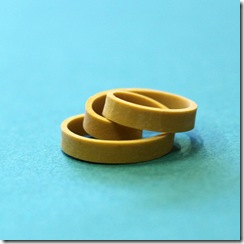
Shinnosuke had also brought one of these to show us.
IMG_3861

A rubber band.  Who can remember where rubber comes from I wonder.

See this bag?

IMG_3857

Well, having been told by Sean that it was made of string (that in turn could have been made by twisting together fibres extracted from cotton plants or even coconut palms) he then delved inside, and pulled out this…..

IMG_3845

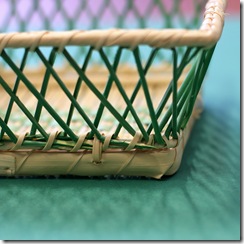
which had been made from strips of the stem of a kind of grass, coiled round and around and around.  And this…..
IMG_3858

which was rather similar to Camille’s duck basket in the way it had been made.  And this…..

IMG_3847

a wooden frame containing examples of Swiss herbs, all of which are used either in medicine or some form of cooking.  This…..

IMG_3850

repellent citronella extracted from a lemon-scented grass-like plant, and which is loathed by pesky mosquitoes.  This…..

IMG_3856

‘plastic’ bag that had been made from potato starch.  And, perhaps most interestingly, this…..

IMG_3848

chewing gum; flavoured with the leaves of the spearmint plant, but the gum itself extracted, as I later learned, from the stem of the peelu tree. 

However, I left this until last. 
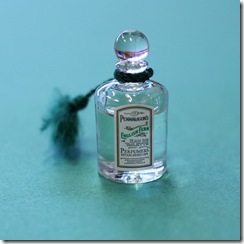
IMG_3851

Brought in by Alex, this teeny tiny glass bottle, stoppered to help keep in the enticing scent of Penhaligon’s (no less!) English Fern eau de toilette.  Which part of the fern, I pondered aloud, do you think they squished to get the perfume.

‘The flowers’, was the unanimous response.  Which led me to this.  Ferns are unusual plants, in that they do not have flowers.  This of course (as Sean quickly realised) means that they do not have seeds.  They produce spores instead.  Remember those little dots?  Well, a closer look (under the microscope) at some little dots that we found earlier, lurking on the underside of a fern leaf in a dark damp place in the school garden…..

IMG_3905

showed us in more detail the spore cases and the too-small-to-see-with-the-naked-eye spores themselves.

IMG_7506

Which begs the question; how on earth do they at Penhaligon’s, make a scent from English Fern if it has no sweet-smelling flowers to squish?  Opinion amongst us was that they probably squish the leaves.  After all, squished mint leaves and squished rosemary leaves (as we remembered) smell delicious.  Why not squished fern leaves?